
News
Shaping Democracy – Strengthening Resilience: ATHENE researchers engage in dialogue with policymakers in the German Bundestag
Democratic processes are under pressure, and critical infrastructure and digital environments are becoming targets of attacks and manipulation. How can RMU’s expertise contribute to solutions—and be linked to political perspectives and needs?
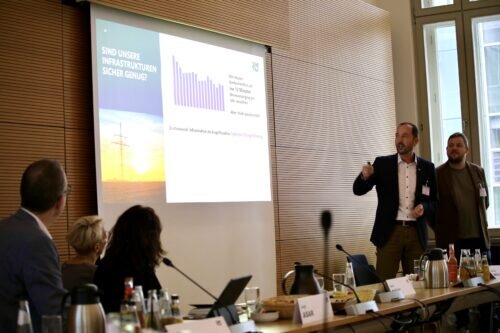
On September 10, the Rhine-Main Universities (RMU) invited members of the German Bundestag to a parliamentary breakfast titled “Shaping Democracy—Strengthening Resilience.” The event focused on how academia and politics can work together to contribute to the sustainability and resilience of our democracy.
In three brief presentations, researchers from the RMU universities provided insights into their current research. Dr. Susanne Garritzmann (GU Frankfurt) and Dr. Nils Steiner (JGU Mainz) presented findings from a recent survey on the state election in Saxony-Anhalt. Among other things, they focused on differences in support for illiberal interventions in democratic processes based on voting intentions, as well as gender-specific differences in voting behavior, particularly among younger voters. Prof. Dr. Armin Schäfer (JGU Mainz) broadened the perspective by offering a European comparison. He highlighted the discrepancy between the high level of general support for democracy as a form of government and the dissatisfaction many citizens feel with how it actually functions. One factor at play here is the extent to which people feel they can influence political decisions.
In the third presentation, ATHENE researchers Prof. Dr. Florian Müller and Prof. Dr. Christian Reuter (both from TU Darmstadt) focused on the vulnerability of critical infrastructure—particularly digital infrastructure—as well as on potential avenues for manipulation in digital environments. Using examples such as hybrid threats and deepfakes, they highlighted current challenges and outlined possible courses of action to strengthen digital sovereignty.
show all news