
News
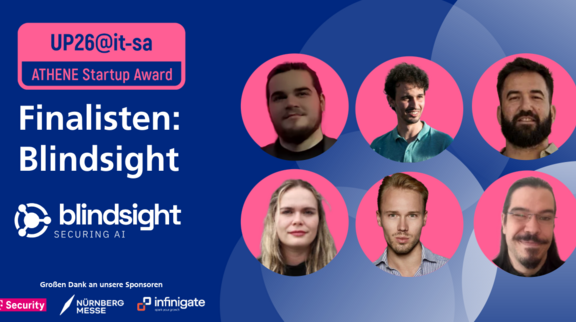
ATHENE UP26@it-sa finalists: An interview with Blindsight
Blindsight provides transparency across the entire AI stack – from prompt injection to shadow AI. It was founded by ethical hacking expert Guilherme Santos, who repeatedly discovered the same vulnerabilities in supposedly secure AI systems. The aim: not to ban the use of AI, but to make it secure.
read more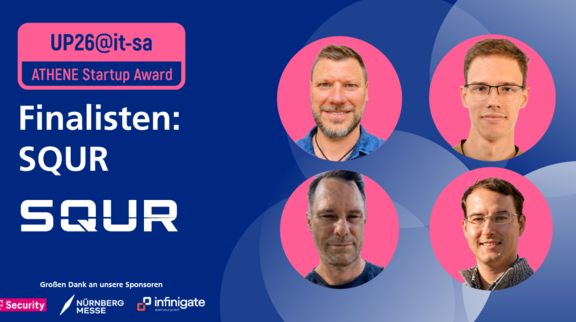
ATHENE UP26@it-sa Finalists: An interview with SQUR
SQUR is launching with the promise of letting AI agents carry out autonomous hacking and providing proof of every discovery, rather than merely assuming it. Developed in Germany, with data stored within the EU and at a price that is said to be affordable even for small and medium-sized enterprises.
read more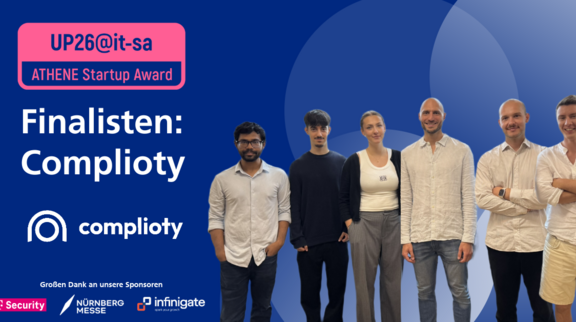
ATHENE UP26@it-sa finalists: An interview with Complioty
According to the VDMA, one in four mechanical engineering companies has experienced a cyber security incident in the last two years. Complioty automatically generates software bills of materials and continuously monitors them for vulnerabilities, rather than simply recording them once and then forgetting about them. From December 2027, the Cyber Resilience Act will make precisely this a mandatory requirement for the entire mechanical engineering sector. In this interview, the founders explain why they changed direction whilst the business was still being set up, and why this very decision became their greatest strength.
read more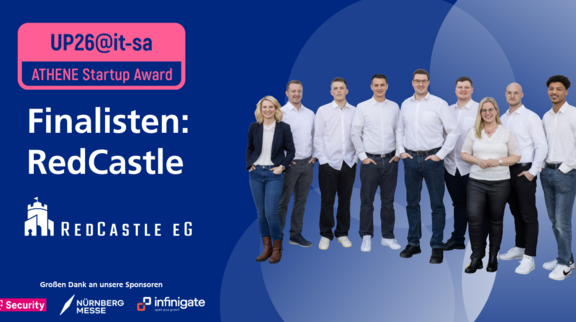
ATHENE UP26@it-sa finalists: An interview with RedCastle
As IT forensic experts, they were always called in only when it was already too late. Felix Wanner and Stefan Köhler were no longer willing to put up with this, so they founded Red Castle to provide effective protection for small and medium-sized enterprises through a managed SOC service. In this interview, the Red Castle founders talk about how they started the business, the most costly mistake in the company’s history – and why they almost didn’t apply for the ATHENE Startup Award UP26@it-sa.
read more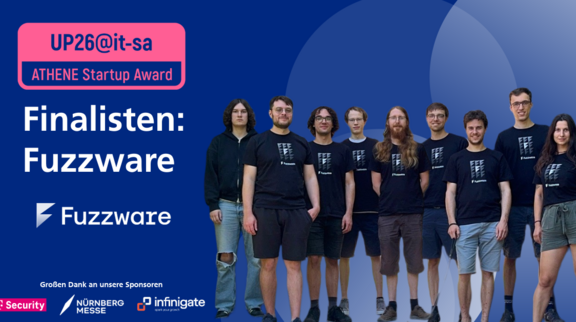
ATHENE UP26@it-sa finalists: An interview with Fuzzware
On stage in Miami, the team hacked into the US power grid live and realised afterwards that critical infrastructure needs more robust security testing. Today, Fuzzware automatically tests the firmware of embedded systems for vulnerabilities, without the need for a physical device or source code. In this interview, the founders explain how a successful hack led to the creation of a company – and what the most difficult step in the process was.
read more
Contact
Clara Pfeuffer
ATHENE Digital Hub Cybersecurity
ATHENE Digital Hub Cybersecurity